Thermo Economic Modular Program (TEMP) – Plus
TEMP Plus is a modular and flexible cycle analysis tool built by Thermochemical Power Group (TPG) at the University of Genova that is capable of performing on-design thermo-economic analysis and optimization of a wide range of conventional and innovative energy systems such as gas turbines, steam turbines, combined cycles, mixed gas-steam cycles, biomass gasification integrated plants, fuel cells, integrated solar, etc. The software can also perform a through-life cost analysis with financial parameters such as internal rate of return, payback period, and net present value. Furthermore, it also facilitates environomic analysis to enable a plant design in compliance with emission regulations and energy policies. The software’s reliability has been extensively validated over the years using industrial and academic data. Moreover, the code has a modular internal structure that allows users to integrate new modules.
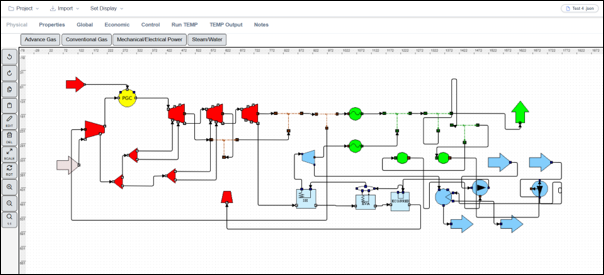
The source code of TEMP Plus is in Python, and the Graphical User Interface (GUI) is built in the Angular Framework. TEMP Plus is the modernized version of the original WTEMP (Web-based Thermo-Economic Modular Program) software, developed in 1993, which has undergone several modifications since its development and has been extensively used by TPG over the last three decades. The development of this tool began when TPG decided to shift its focus to the study and optimization of complex and non-conventional energy systems that need to demonstrate their technical and economic viability. This reason convinced us to develop a detailed software tool for the complete and automatic thermoeconomic analysis of power and cogenerative plants of different types, concepts, and sizes.
Firstly, the basic idea was to create a modular program to allow free development by all the users: such a happy starting point led to a code that, at present, offers you 94 modules, and is capable of simulating several types of energy plants (can’t say “all” because it is impossible to know what the future is preparing…) from conventional systems (e.g., combined cycle) to advanced concepts (humid air cycle, fuel cell hybrid system, biomass gasification integrated plant, etc.), automatically provides the user with detailed thermodynamic, exergetic, economic data about both the internal structure of the layout and the plant as a whole. Of course, the results obtained are as accurate as the basic assumptions the user makes about thermodynamic performance and component costs.
As always, it is a good idea to be skeptical of the most trivial results; rather, it is better to value and trust the results obtained through the efforts and experience of a team of well-established researchers and engineers, and this is what we did. So far, we have had several occasions to test the code’s reliability with industrial and academic field data; this allows us to use the software as our “rule of thumb” for energy plant assessment from a thermoeconomic point of view.
Concept and approach
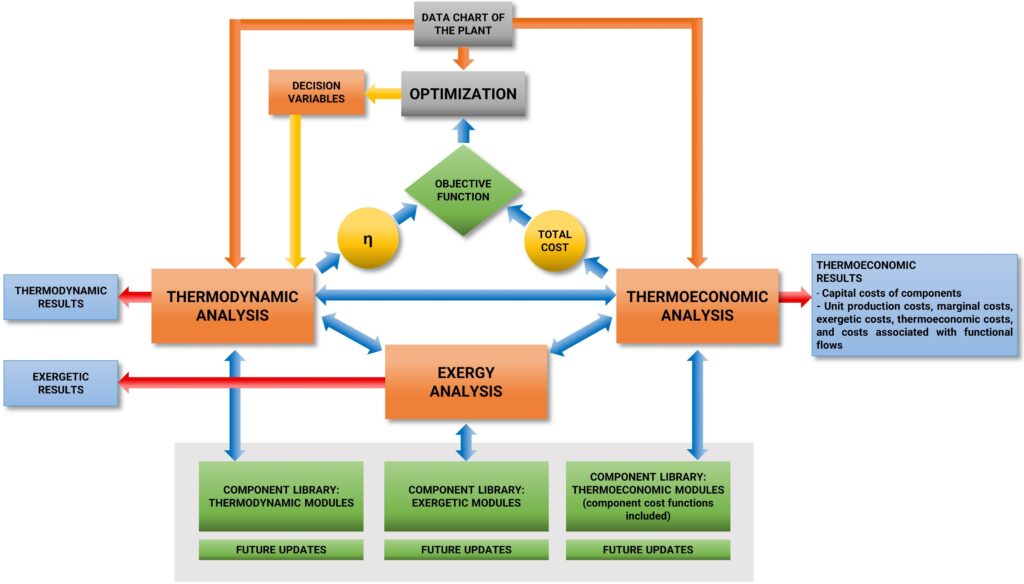
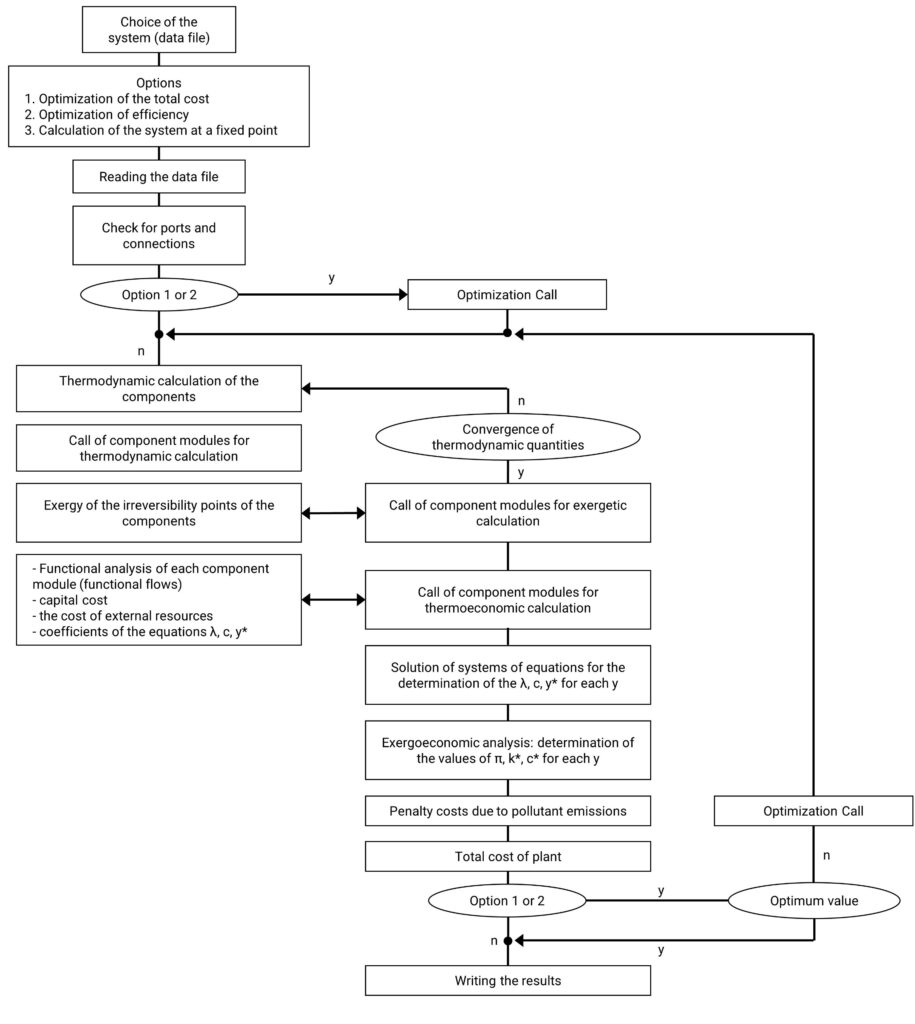
TEMP Plus allows the thermoeconomic and exergoeconomic analysis of a large number of energy cycles, such as the following: steam, gas turbine, combined, and advanced cycles (mixed gas-steam cycles, biomass gasification integrated plant, fuel cells – SOFC and MCFC – and hybrid cycles, partial oxidation cycles, chemical recovery cycles, integrated solar combined cycles). The system to be calculated is defined as an ensemble of interconnected components.
Operating characteristics and mass and energy balances for each component in the on-design state are calculated sequentially until the conditions (pressure, temperature, mass flow, etc.) at all interconnections converge to stable values. After the thermodynamic calculation, the thermoeconomic analysis is performed: first, each component purchase cost is determined using cost or costing equations; therefore, the internal thermoeconomic and exergoeconomic analysis is carried out through the cost and exergy balances of each module. The internal irreversibility and capital cost of each component can be determined, representing exergy and monetary expenditures, respectively. Thermoeconomic analysis provides component-level unit and marginal costs and plant-level thermal efficiency, power and heat generation, and energy costs. Through-life analysis further evaluates the internal rate of return, payback period, and net present value, providing a comprehensive assessment of the plant’s thermodynamic and economic performance.
The tool also includes an optimization tool that enables thermoeconomic optimization of the energy system with different objective functions; the most important are thermal efficiency and cost of electricity. In addition to the complete thermoeconomic assessment, the environomic analysis of power plants is also available. The criteria that will influence the evolution of the energy market this century will be based on the need to preserve the environment (both locally and globally) through new technologies and sustainable use of existing resources. In particular, the global warming problem, linked to CO2 emissions, requires an international energy policy devoted to CO2 regulation: the energy policy should aim to penalize the inefficient use of fossil energy sources that lead to higher CO2 emissions than a more efficient use.
Fields of application
TEMP Plus can thus be a powerful tool whenever a study or the design of a new or non-conventional energy system is necessary. From simple thermodynamics to exergonomics, mixed analyses and various KPIs can be selected for analysis or optimization, helping the user explore design possibilities and make the best decision.
Examples of usage are very wide and range from conventional to innovative GT-based cycles, from traditional steam to cycles involving organic fluids and supercritical carbon dioxide, from traditional power applications to high-temperature heat pumps, from fuel cells to pressure-gain combustors.
Example Case
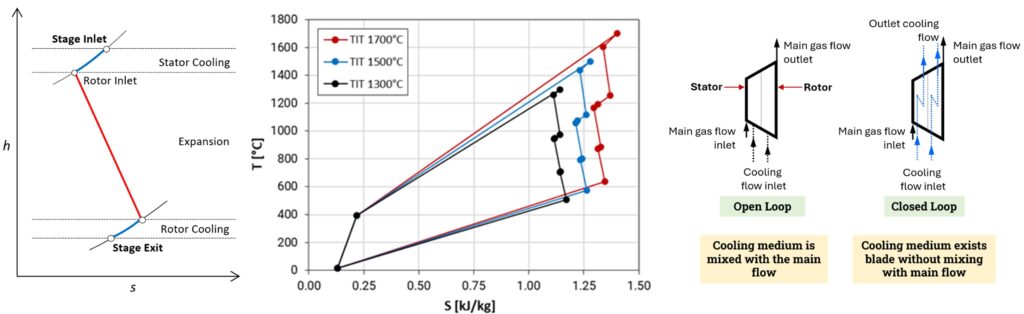
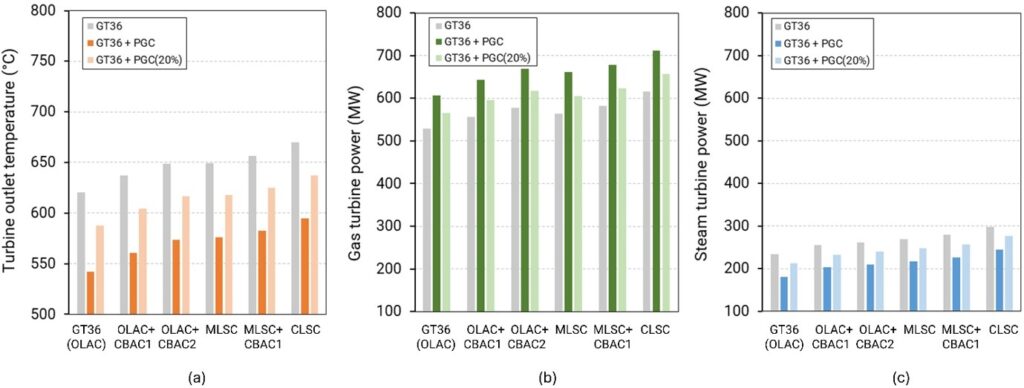
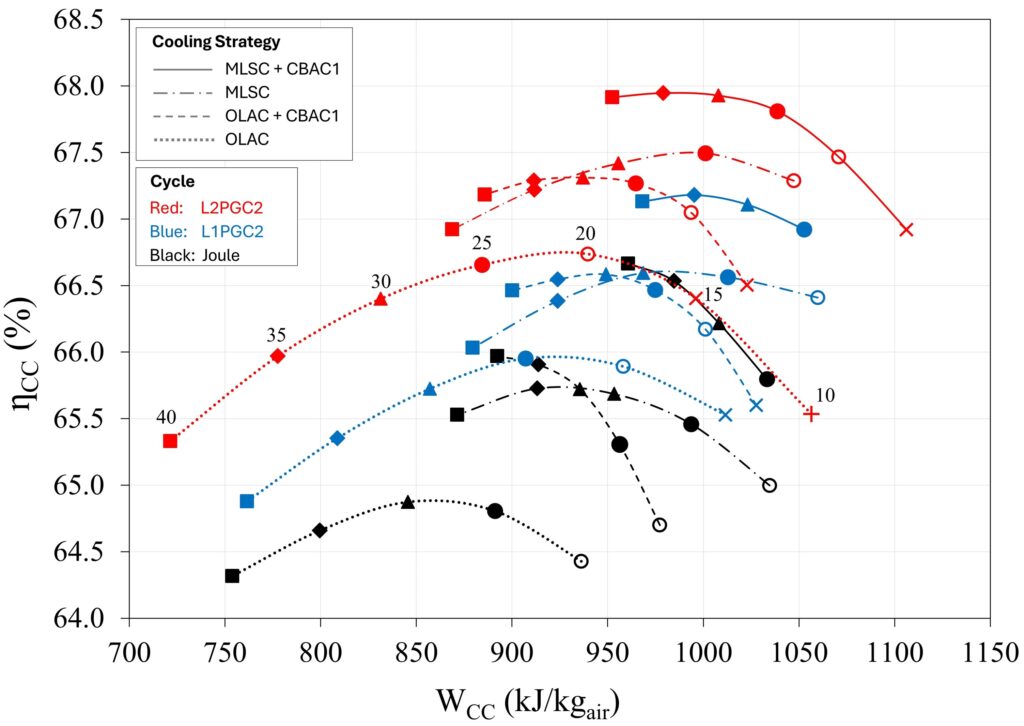
In particular, for gas turbine systems, TEMP Plus also features advanced turbine blade cooling models that enable the prediction of cooling flow under given turbine conditions and the expansion of the main gas flow with the cooling flow in multi-state turbines. Moreover, it features advanced models for using steam and exhaust gases as cooling media in both open and closed loops. These models allow for capturing the impact of turbine cooling on gas turbine performance under different conditions and with different cooling media, to study more complex and innovative energy systems. The addition of these models to the code was allowed only because of the code’s modularity, flexibility and upgradability, which were key objectives in its early development years.
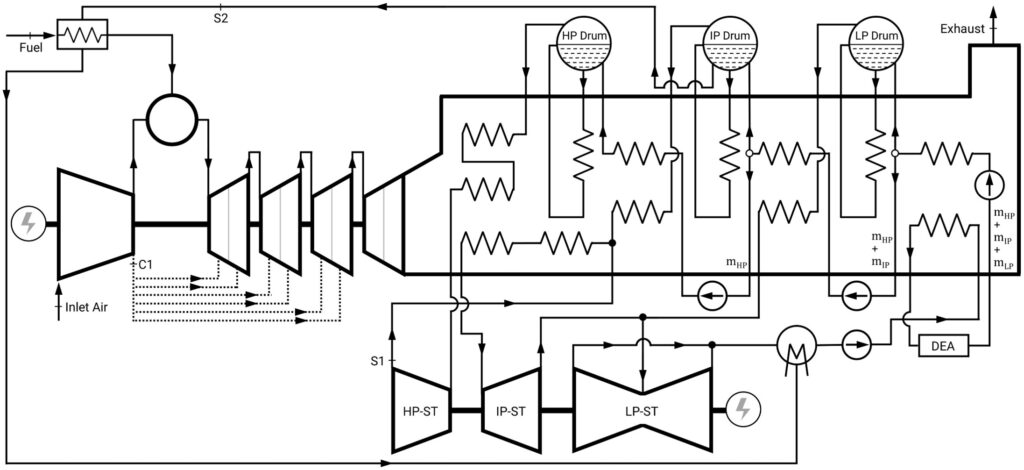
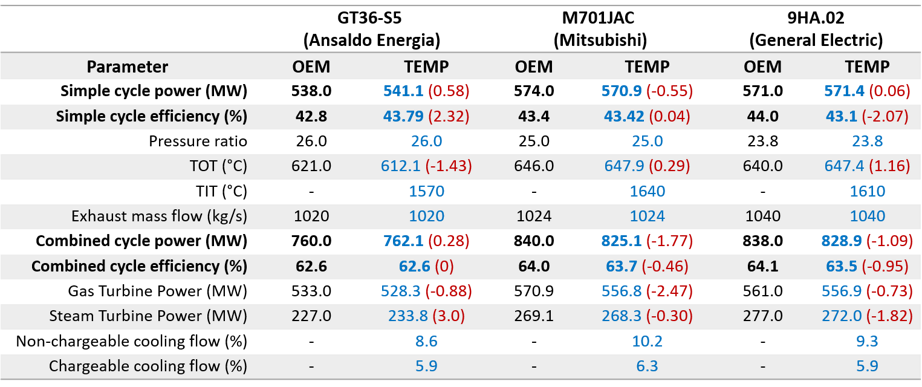
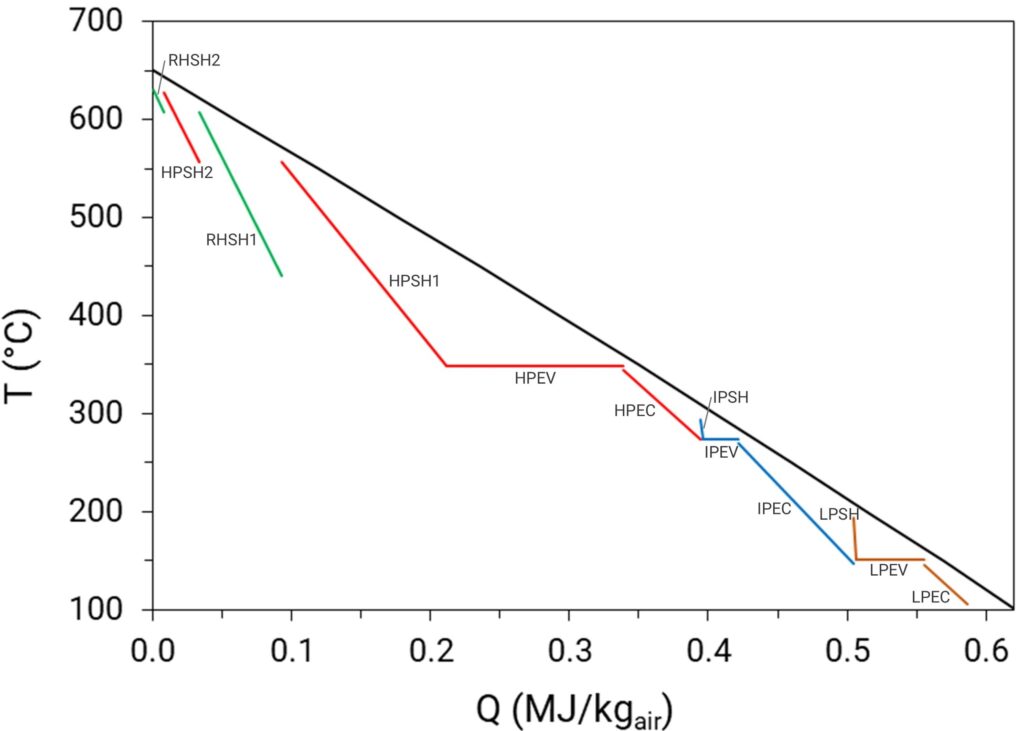
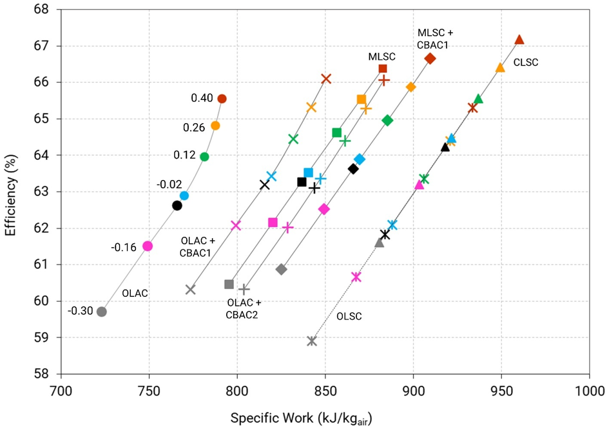
These cooling models were employed in one of the most recent applications of TEMP Plus, in which a complex three-pressure-level reheat (3PRH) combined-cycle gas turbine (CCGT) was modelled using the software, and it was validated against the specifications of modern state-of-the-art H-class combined cycles from three major OEMs, Ansaldo Energia, Mitsubishi and General Electric. These validated CCGT models were subsequently used as a base case to study the performance impact of innovative technologies such as pressure-gain combustion, steam-integrated turbine cooling, and exhaust-gas cooling to improve the efficiency and power output of future CCGT power plants.
Publications
1. Thermoeconomic Analysis of Gas Turbine Based Cycles
A.F. Massardo, M. Scialo’
ASME Transactions, Journal of Engineering for Gas Turbines and Power, Vol. 122, pp. 664-671
2. WIDGET-TEMP: a novel web-based approach for thermoeconomic analysis and optimization of conventional and innovative cycles
A. Traverso, A.F. Massardo, W. Cazzola, G. Lagorio
Proceedings of the ASME Turbo Expo 2004: Power for Land, Sea, and Air. Volume 7: Turbo Expo 2004. Vienna, Austria. June 14–17, 2004. pp. 623-631. ASME.
3. Thermoeconomic analysis of SOFC-GT hybrid systems fed by liquid fuels
M. Santin, A. Traverso, L. Magistri, A. Massardo
Energy, Volume 35(2), pp. 1077-1083
4. Existing large steam power plant upgraded for hydrogen production
L. Galanti, A. Franzoni, A. Traverso, A. Massardo
Applied Energy, Vol. 88, pp.1510-1518
5. Micro gas turbine thermodynamic and economic analysis up to 500 kWe size
L. Galanti, A. F. Massardo
Applied Energy 88 (2011) 4795–4802
6. Hydro-methane and methanol combined production from hydroelectricity and biomass: Thermo-economic analysis in Paraguay
M. Rivarolo , D. Bellotti , A. Mendieta , A.F. Massardo
Energy Conversion and Management 79 (2014) 74–84
7. A Comprehensive Thermodynamic Analysis of Gas Turbine Combined Cycles with Pressure Gain Combustion Based on Humphrey Cycle
A. Dubey, A. Sorce, P. Stathopoulos
J. Eng. Gas Turbines Power. Feb 2025, 147(2): 021013
8. Efficiency Enhancement in Pressure Gain Combustion Combined Cycle Gas Turbine by Blade Cooling Integration with Bottoming Cycle
A. Dubey, A. Sorce, A. F. Massardo
J. Turbomach. Dec 2025, 147(12): 121016
9. Integrating Turbine Blade Cooling With Exhaust Gas Recirculation for Enhanced Carbon Capture in Combined Cycle Gas Turbine
A. Dubey, A. Verhaeghe, W. De Paepe, A. Sorce
J. Turbomach. Feb 2026, 148(2): 021010
10. Alternative gas turbine architecture for pressure gain combustion combined cycles with steam-integrated turbine cooling
A. Dubey, A. Sorce, P. Stathopoulos
Applied Thermal Engineering (Accepted: In Press)